

The next stage of connected device growth may come from smaller, more personal form factors. Smartphones remain the anchor device, but wearables and smart tags are expanding the ways consumers interact with technology throughout the day.
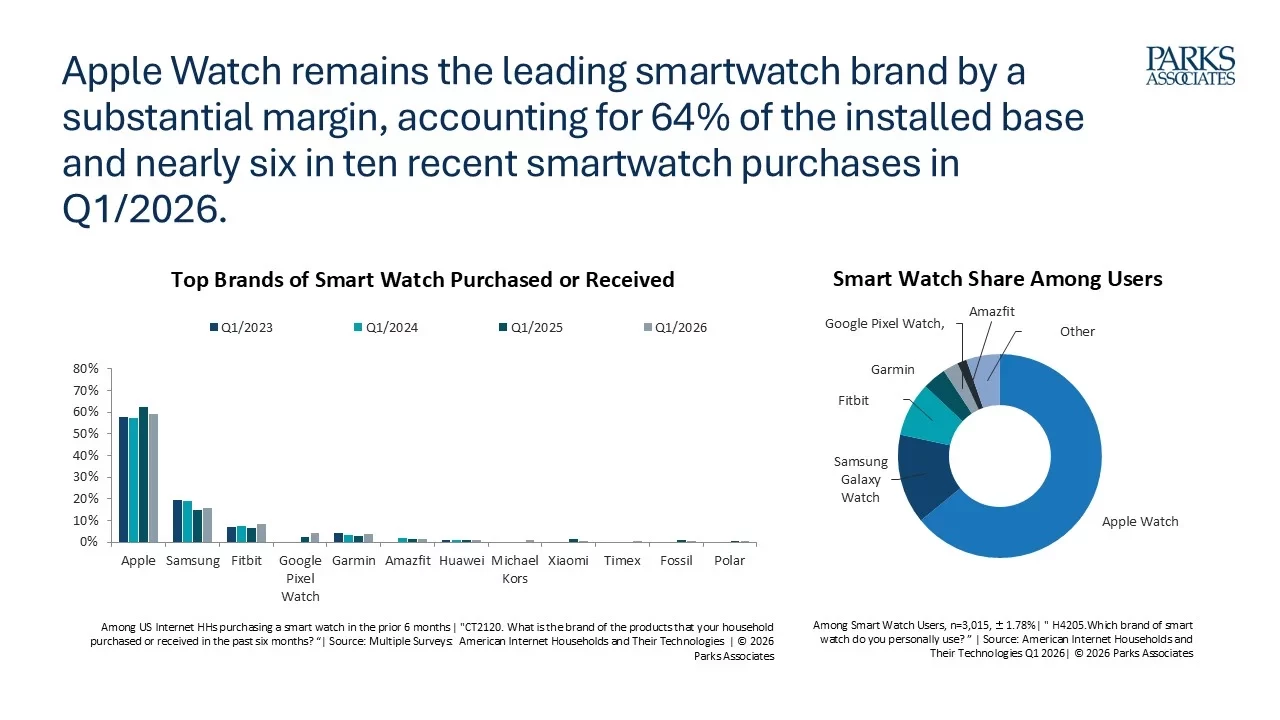
Parks Associates data shows that Apple Watch remains the leading smartwatch brand by a substantial margin, accounting for 64% of the installed base and nearly six in ten recent smartwatch purchases in Q1 2026. This gives Apple a unique advantage because the watch extends the ecosystem from something consumers carry to something they wear.
That matters for the smart home. The watch can become a mobile control point for alerts, security notifications, health signals, payments, communication, and home controls. Instead of asking consumers to pick up a phone, open an app, and manage a system, the watch can make connected experiences more immediate and personal.
Smart tags also point to a broader shift. Apple remains the leading smart tag brand, with Samsung gaining share and Tile declining. Smart tag purchases are closely tied to smartphone ecosystems, with iPhone users overwhelmingly choosing Apple smart tags and Android users more likely to choose Samsung.
The use cases are expanding beyond lost keys and luggage. Smart tags can support personal safety, family coordination, pet tracking, travel visibility, child backpack monitoring, and light caregiving. They do not replace wearables, security systems, or medical monitoring, but they create a low-cost location layer that can support peace of mind.
Smart rings are another emerging form factor to watch. They offer a more passive way to collect health and wellness signals than a smartwatch or fitness tracker. If the ring format continues to gain traction, it could create a new wearable segment focused on sleep, comfort, health monitoring, and low-friction daily use.
The broader story is that connected ecosystems are becoming more personal. The phone remains the center, but watches, rings, earbuds, tags, and other small devices extend the platform across the body, home, family, and daily routine.
The companies that win will be those that turn these devices into trusted control points, not just accessories.
Data referenced from Parks Associates, Tech Ecosystem Dashboard, Q1 2026
The Tech Ecosystem Dashboard helps companies see which devices are becoming control points, which categories are slowing, where replacement cycles are creating opportunity, and which brands are building stronger ecosystem loyalty. For device makers, service providers, platforms, retailers, utilities, insurers, and home service companies, these insights help identify where to compete, where to partner, and where consumers need a better experience.
Consumer Insights Dashboards present survey-based consumer research that tracks movement of foundational market metrics, such as product or service adoption, household spending intentions, churn, and key tracking metrics on leading industry players.
Parks Associates surveys 8,000 U.S internet households every quarter, with additional surveys fielded throughout the year. The households surveyed represent the national demographics for US internet households, 91% of all US households.