

The living room has become one of the most important battlegrounds in consumer technology. Smart TVs are no longer just screens, and streaming media players are no longer just accessories. They are control points for content discovery, advertising, subscriptions, app placement, and household engagement.
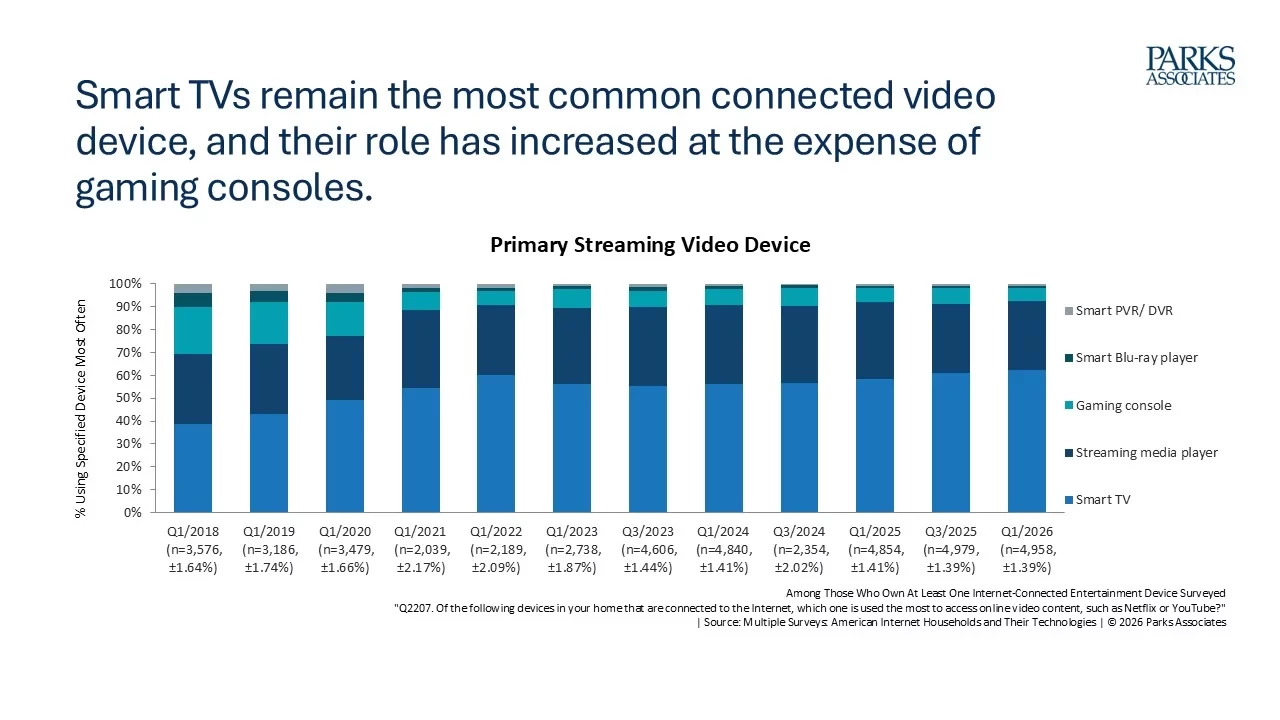
Parks Associates data shows a major shift in primary streaming behavior. Smart TVs increased from 39% of primary streaming video devices in Q1 2018 to 62% in Q1 2026. Gaming consoles, once a much larger part of streaming behavior, now account for only 6% of primary streaming video devices. Streaming media players continue to play a consistent secondary role, but the center of gravity has moved to the smart TV.
This shift changes the competitive landscape. TV hardware still matters, but the operating system matters more than ever. Samsung Tizen remains the leading smart TV OS, with 36% of the most-used smart TV operating systems in Q1 2026. Roku TV OS has grown significantly and now holds 17%, making it the clearest challenger to Samsung in the smart TV platform race.
Roku's position is especially important because it is strong in both streaming media players and smart TV operating systems. Roku reached 43% of recent streaming media player purchases in Q1 2026, ahead of Amazon at 30%. It also holds a strong share of the most-used streaming media player OS. This gives Roku a powerful role in the living room, even though it does not rely on a traditional TV hardware model.
The broader implication is that connected TV competition is shifting from device sales to platform monetization. Companies that control the interface can influence what consumers watch, which apps they open, which subscriptions they manage, and which ads they see.
The living room is no longer just about entertainment access. It is becoming a platform layer for media, advertising, commerce, smart home control, and household engagement. That makes the TV OS one of the most valuable positions in the connected home.
Data referenced from Parks Associates, Tech Ecosystem Dashboard, Q1 2026
The Tech Ecosystem Dashboard helps companies see which devices are becoming control points, which categories are slowing, where replacement cycles are creating opportunity, and which brands are building stronger ecosystem loyalty. For device makers, service providers, platforms, retailers, utilities, insurers, and home service companies, these insights help identify where to compete, where to partner, and where consumers need a better experience.
Consumer Insights Dashboards present survey-based consumer research that tracks movement of foundational market metrics, such as product or service adoption, household spending intentions, churn, and key tracking metrics on leading industry players.
Parks Associates surveys 8,000 U.S internet households every quarter, with additional surveys fielded throughout the year. The households surveyed represent the national demographics for US internet households, 91% of all US households.

