

The 2026 NCTC Independent Show reinforced that independent broadband providers are in the middle of a significant business transformation. While broadband remains the core business, operators are increasingly focused on expanding the lifetime value of each customer through mobile, managed Wi-Fi, streaming, smart home services, AI, and stronger customer engagement rather than relying solely on internet access. Nearly every discussion centered on helping providers compete against larger national operators through bundled services, operational efficiency, and differentiated customer experiences.
The biggest takeaway
One theme was repeated throughout the event: the traditional pay TV business is becoming increasingly difficult to sustain and there is great opportunity to change with the times. Rising programming costs, retransmission fees, and evolving digital rights continue to squeeze already thin profit margins. Rather than simply accepting that reality, NCTC is focused on helping its members adapt by enabling new ways to deliver video and entertainment experiences, giving providers more flexibility in how they serve customers and strengthening their ability to compete in a rapidly changing market. The emphasis was not on abandoning video, but on finding sustainable ways to continue connecting customers with the content consumers value while building stronger, more differentiated service offerings. A key focus was leveraging the video offering for retention and to establish a sticker “bundle.”
At the same time, NCTC is positioning itself as much more than a programming cooperative. The organization is becoming a technology, mobile, AI, and services partner that helps independent operators deploy new revenue opportunities without having to build everything themselves. AI, broadband convergence, MVNO/mobile, and operational efficiency were featured throughout the conference agenda.
Conversations and sessions that stood out
During the event, we participated in and attended discussions with several operators and industry leaders, including:
- EPB – Sandra Tilley discussed customer retention, branding, community broadband, and competing against national providers.
- Buckeye Broadband – Geoff Shook shared perspectives on broadband competition, customer experience, and video evolution.
- Summit Broadband – Mark Rankin discussed fiber growth, managed services, and value-added offerings.
- NCTC leadership – Lou Borrelli and Eric Bergstrom emphasized MVNO, broadband convergence, streaming evolution, and helping members launch new services faster.
- Disney/ESPN – Jimmy Zasowski provided insight into content distribution and the evolving video ecosystem.
- AI keynote – Noelle Russell focused on practical AI applications that improve operations and customer engagement rather than AI for its own sake.
- ACA Connects – Grant Spellmeyer and FCC Commissioner Olivia Trusty discussed regulatory priorities affecting independent broadband providers.
Major themes
- Video remains an important part of customer retention, but providers are looking for more flexible and profitable distribution models.
- Mobile is becoming a critical component of broadband bundles and customer stickiness.
- AI is moving beyond experimentation into customer service, operations, marketing, and network management.
- Fiber, Wi-Fi, mobile, and streaming are increasingly viewed as one connected customer experience rather than separate products.
- Independent providers are investing heavily in customer experience, retention, and operational efficiency instead of competing only on speed.
During the event, Elizabeth Parks presented research from Parks Associates latest consumer studies including trending and quarterly survey work of 8,000 US Internet households.
Session 1: Video is Evolving: How to Win in a Changing Video Ecosystem
This session focused on how the video market has shifted from competing on exclusive content to competing on simplicity and customer experience. The presentation outlined today's fragmented video ecosystem, spanning traditional pay TV, vMVPDs, streaming services, FAST, and over-the-air television, and argued that broadband providers now have an opportunity to differentiate by helping customers discover, manage, and bundle video services more effectively.
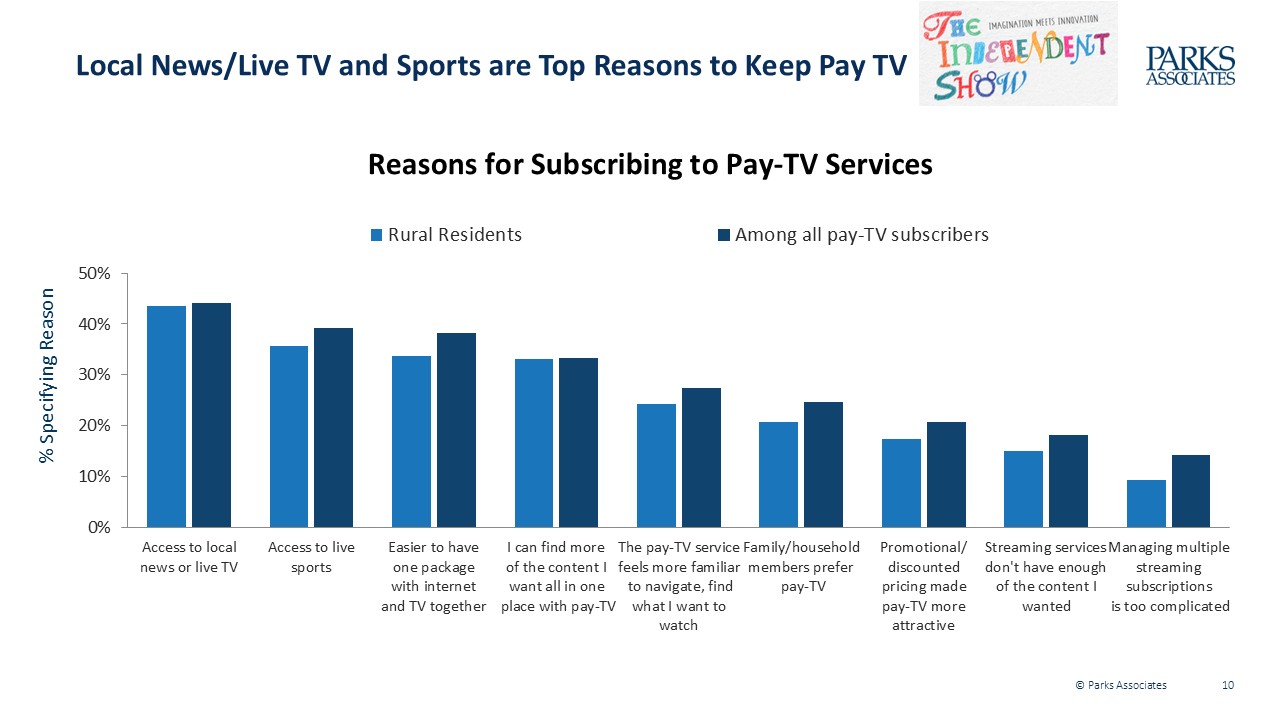
The data showed that while streaming continues to grow, pay TV remains important for many households, particularly for live sports, local news, and the convenience of having everything in one place. Consumers continue to cancel pay TV because of cost and limited perceived value, but many eventually return, highlighting an opportunity for providers to rethink how video is packaged. The presentation also found that more than half of households are interested in skinny bundles, particularly consumers already watching live programming through streaming and social platforms.
Key takeaways
- Streaming dominates entertainment, but live TV, sports, local news, and bundled experiences continue to create value for broadband providers.
- Future growth comes from simplifying video discovery, aggregation, and bundled entertainment experiences rather than competing on content alone.
Session 2: Turn Connectivity into Growth: The Next Wave
This presentation focused on how broadband providers can drive growth by expanding beyond connectivity into value-added services. Rather than relying on speed as the primary differentiator, providers have an opportunity to increase customer satisfaction, profitability, and retention through managed Wi-Fi, mobile, smart home, security, technical support, and other connected services. The presentation emphasized that video attracts customers, mobile strengthens the relationship, and connected services deepen engagement within the home.
The research showed that as broadband speeds increase, consumers place greater value on reliability, Wi-Fi performance, and customer service than on raw speed, security, streaming TV bundles, cybersecurity, adaptive Wi-Fi, and technical support were among the services with the greatest impact on Net Promoter Score. The presentation also highlighted growing connected device adoption, increasing demand for reliability-focused services such as router backup and cellular backup, and emerging opportunities in smart home and assistive care technologies.
Key takeaways
- Quality of experience, reliability, and customer support have become more important competitive differentiators than broadband speed.
- Bundling additional value-added services increases customer satisfaction, loyalty, and revenue opportunities.
Session 3: Making It Easier: Member Momentum & What's Next for NCTC
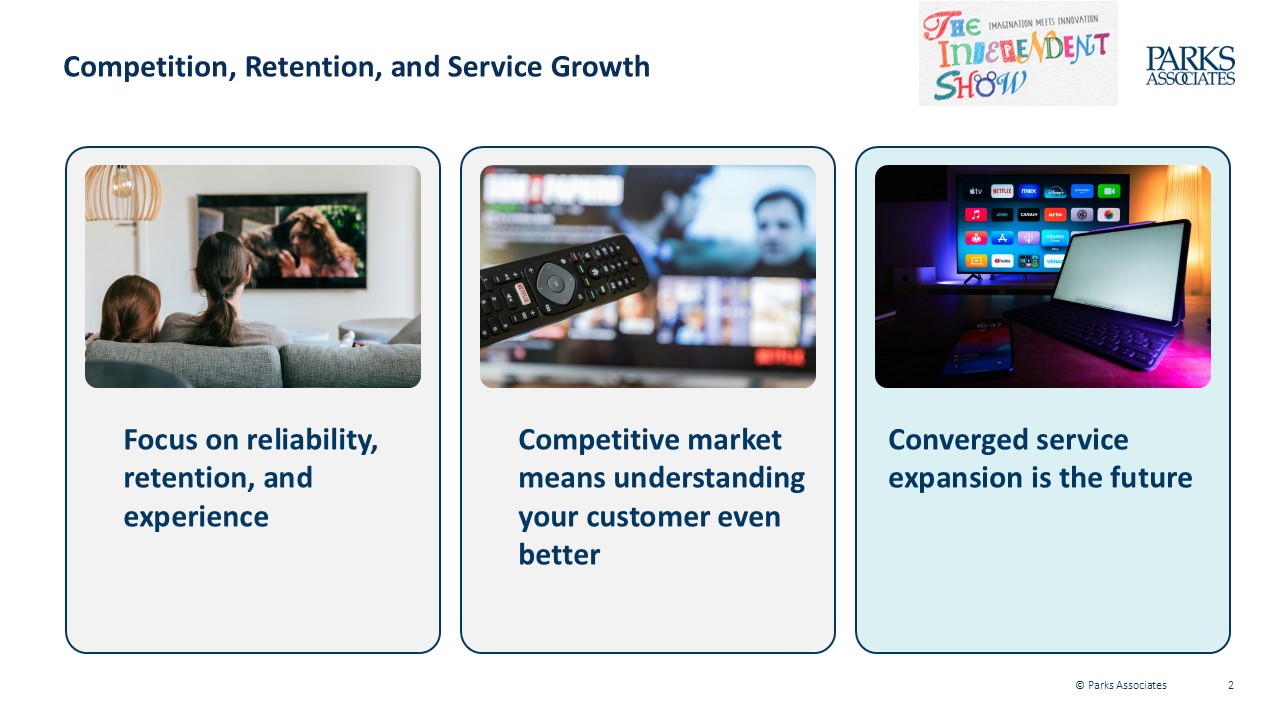
This session examined the opportunities and challenges facing independent broadband providers, particularly in rural markets. The presentation focused on retention, customer understanding, and expanding services beyond broadband. It highlighted that rural providers continue to benefit from strong customer relationships but must continue evolving through bundled services, improved customer experiences, and converged offerings.
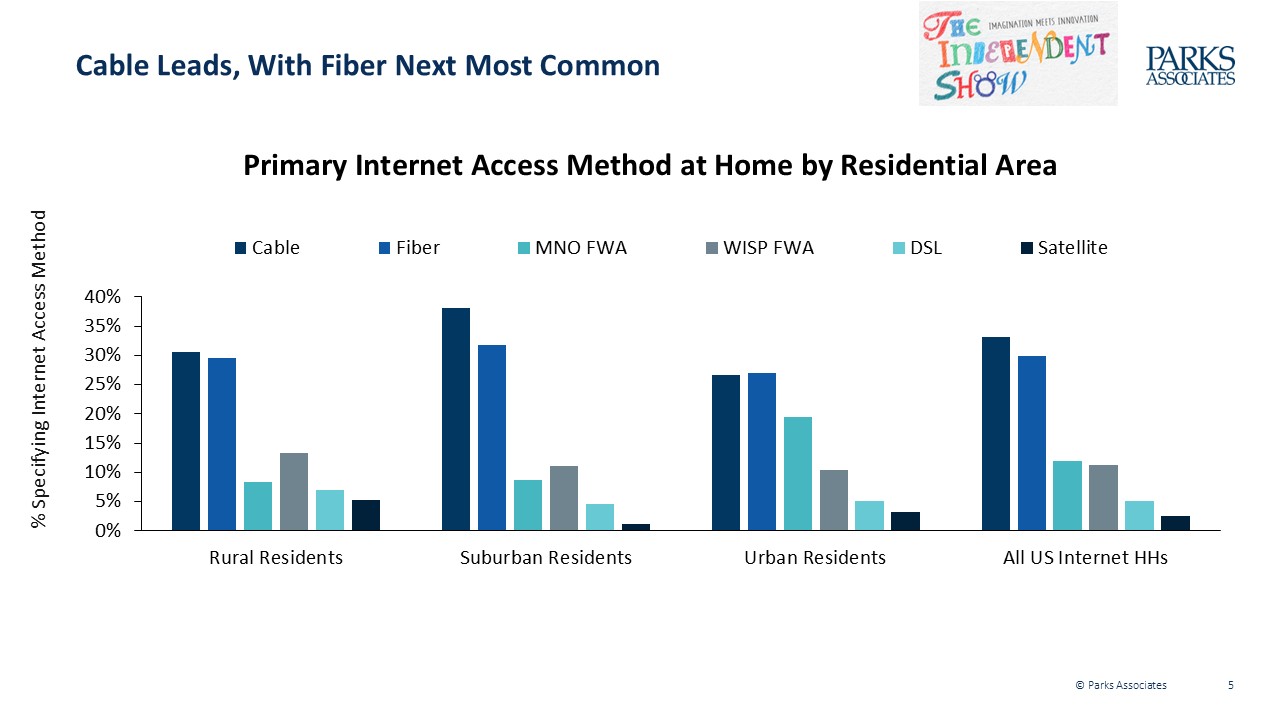
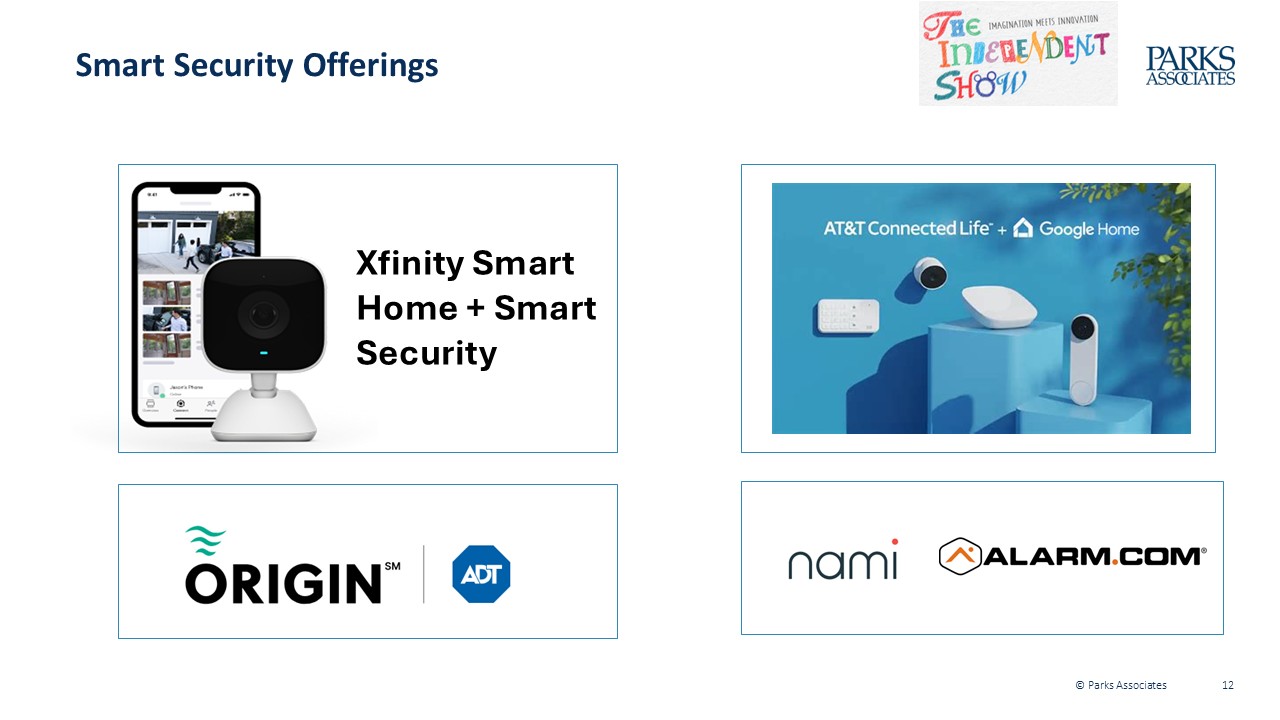
The research showed that cable and fiber remain the dominant technologies, while rural customers continue to value reliability, affordable pricing, and bundled services. Rural households are generally less likely to switch providers than urban households, creating an opportunity to deepen customer relationships through streaming, managed Wi-Fi, mobile, smart home, and security offerings. The presentation concluded with examples of emerging smart security ecosystems, illustrating how providers are expanding beyond connectivity into broader connected home services.
Key takeaways
- Rural broadband providers have significant opportunities to grow through bundled services rather than broadband connectivity alone.
- Reliability, customer experience, and expanded connected home services will play an increasingly important role in customer retention and long-term growth.