

Connected products are creating new opportunities for manufacturers to build value well beyond the initial product sale. As more products become connected, the data generated throughout the product lifecycle can help companies improve performance, understand how customers use their products, strengthen customer relationships, and identify new service and revenue opportunities. The challenge is turning this growing volume of data into insights and actions that create measurable value.
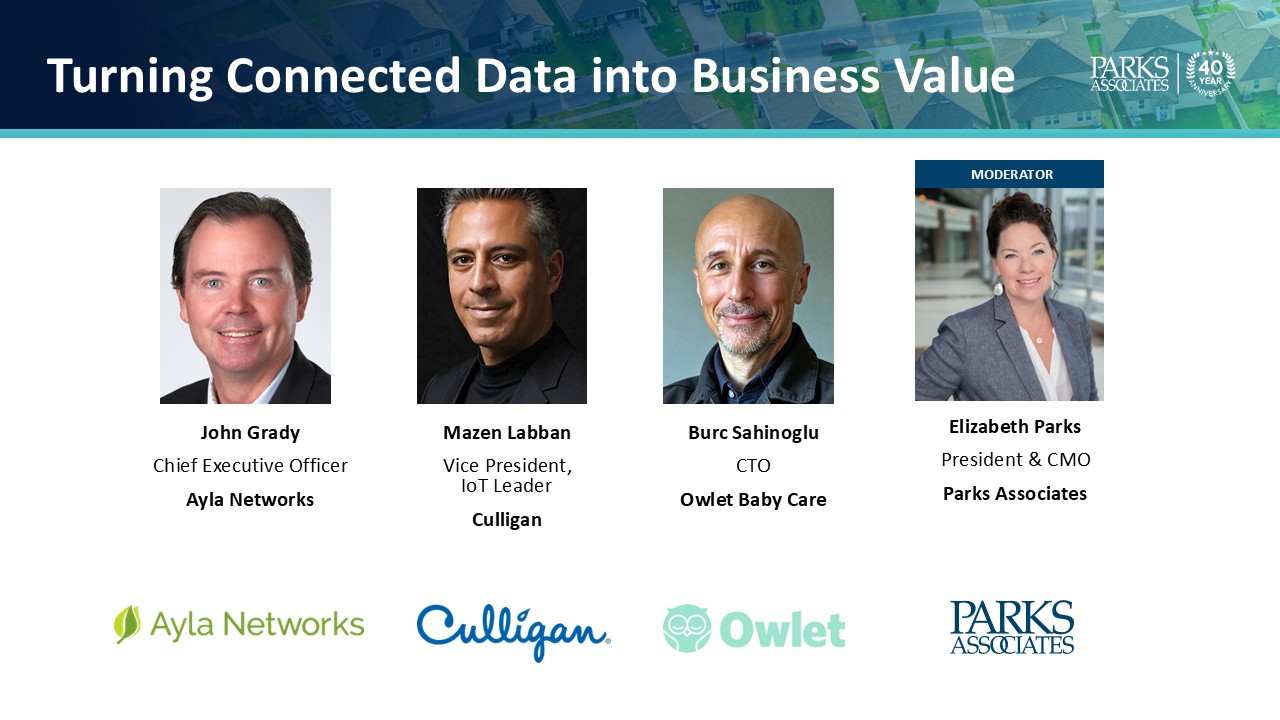
On October 8, Parks Associates will host “Turning Connected Data into Business Value,” a webinar examining how companies are using connected product data to improve products and customer outcomes. The session features John Grady, CEO, Ayla Networks; Mazen Labban, Vice President and IoT Leader, Culligan; and Burc Sahinoglu, CTO, Owlet Baby Care. Elizabeth Parks, President and CMO, Parks Associates, will moderate the discussion.
The conversation will focus on three areas: data across the connected product lifecycle; intelligence that improves products and customer outcomes; and strategies for extending lifetime value and creating recurring revenue. The speakers bring perspectives from connected product platforms, water solutions, and connected health and baby care, offering a look at how these strategies apply across different markets.
Connected products change the customer relationship
Connectivity changes what happens after a product is sold. Manufacturers can gain greater visibility into product performance, feature usage, customer engagement, and potential problems. This creates an opportunity to maintain an ongoing relationship with the customer across the full product lifecycle.
For companies such as Ayla Networks, Culligan, and Owlet, connected data supports very different products and customer experiences, but many of the business opportunities are similar. Manufacturers are looking for ways to use this intelligence to improve product design, simplify the customer experience, anticipate service needs, and deliver additional value over time. Product strategy increasingly includes the physical product along with software, cloud services, analytics, integrations, support, and services surrounding the device.
Engagement starts with the customer experience
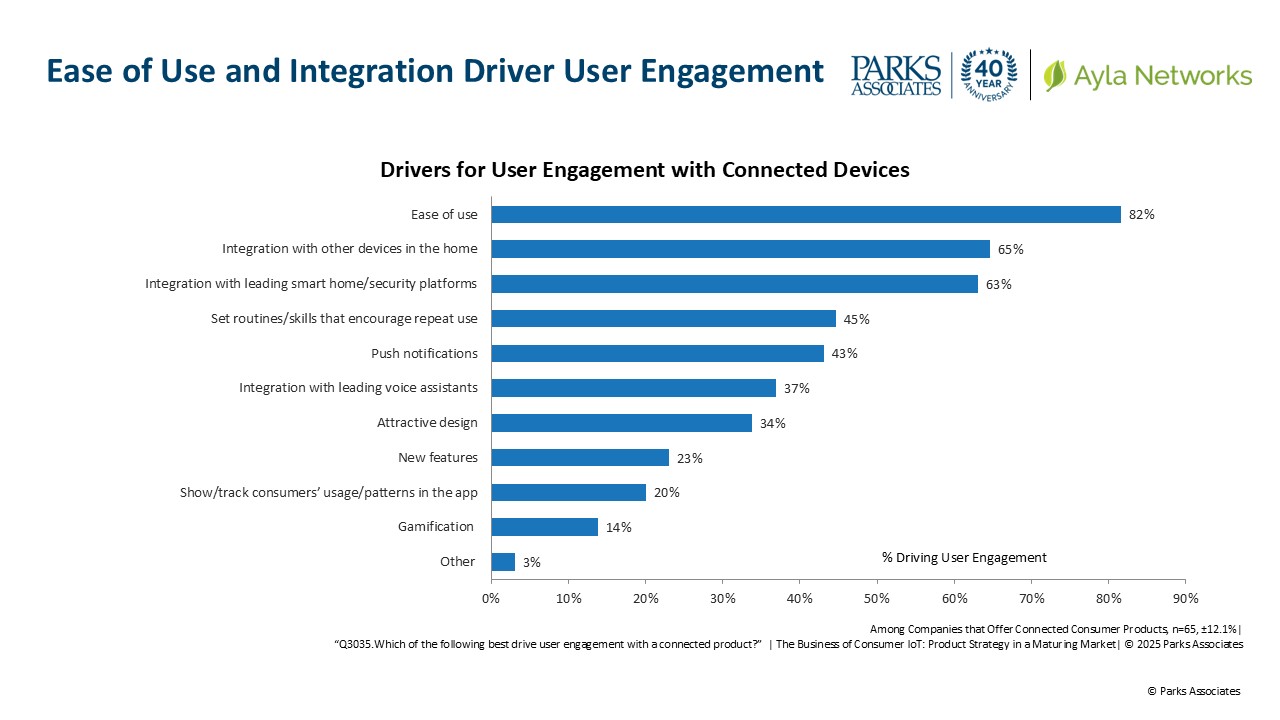
Parks Associates research among companies offering connected consumer products finds 82% identify ease of use as a driver of user engagement. Integration is also critical, with 65% citing integration with other devices in the home and 63% citing integration with leading smart home and security platforms.
By comparison, 23% identify new features as a key driver of engagement. These findings reinforce the importance of usability and integration in connected product strategy. Consumers need products that are easy to use and fit naturally into their existing technology environment. The October 8 discussion will examine how companies can use connected data to better understand these behaviors and improve engagement throughout the customer lifecycle.
Turning product data into actionable intelligence
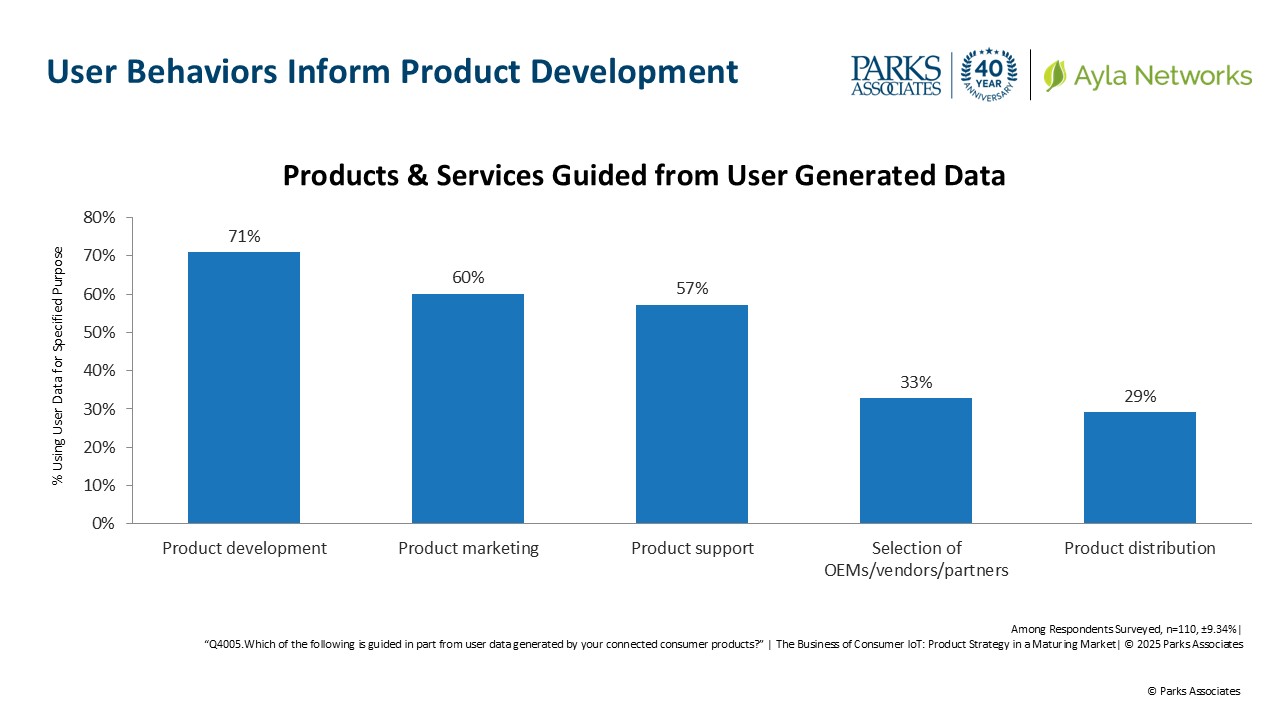
Connected products provide manufacturers with intelligence that was difficult to obtain from traditional products. Data from products in the field can inform product development, troubleshooting, predictive maintenance, customer support, and future product design. It can help companies identify patterns across their installed base and understand where the customer experience can be improved.
This intelligence can support a shift from reactive to proactive service. Identifying an issue before a product fails can reduce customer frustration, improve outcomes, and potentially lower service and support costs. Companies need to determine which data matters, how to analyze it, and how to translate the resulting intelligence into actions that benefit both the customer and the business.
Building value beyond the initial sale
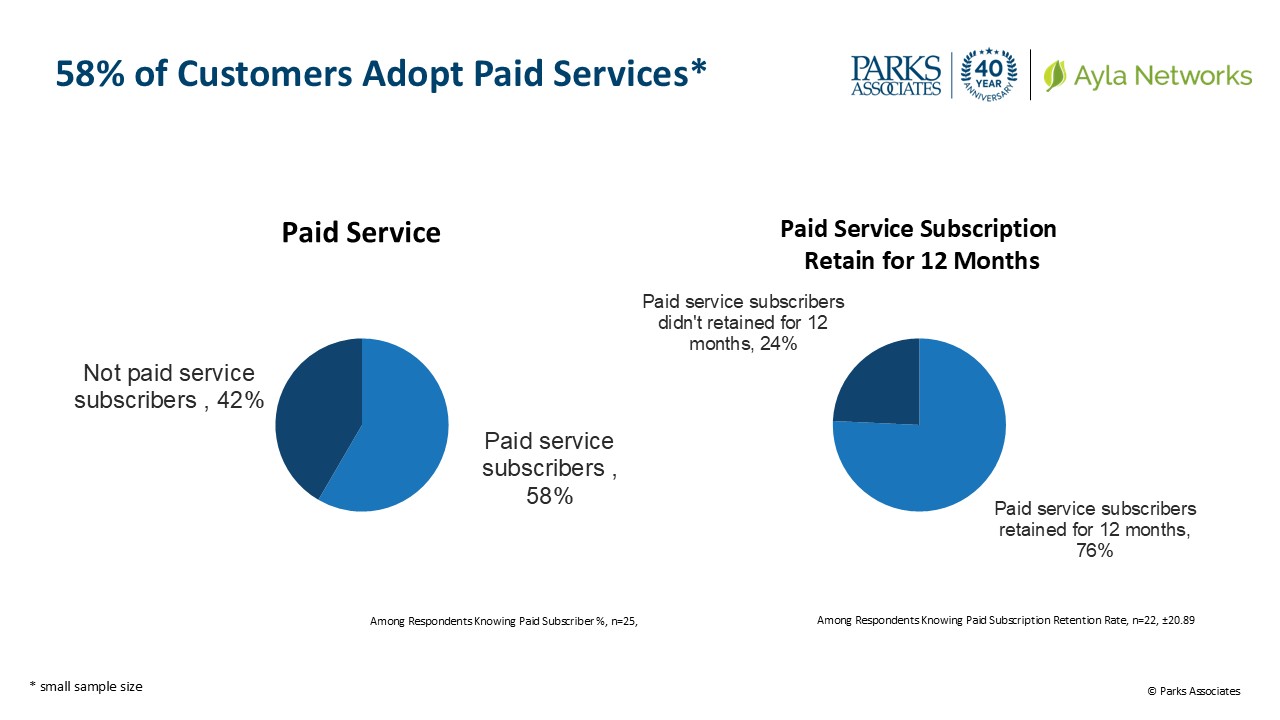
Connected products also create a foundation for recurring services and longer-term revenue relationships. Parks Associates research among a small sample of connected product companies finds an average of 58% of their customers adopt paid services. Among companies able to report retention, 76% of paid service subscribers remain subscribed for at least 12 months. These findings are directional because of the small sample size, but they illustrate the potential for services to extend the value of the connected product relationship.
The strongest recurring services provide customers with clear and ongoing benefits through monitoring, insights, maintenance, enhanced functionality, protection, automation, and other premium experiences.
Join us on October 8, John Grady, Mazen Labban, Burc Sahinoglu, and Elizabeth Parks will explore how companies are approaching these opportunities and where connected data can create the greatest value.
The connected product market is entering a new stage where the value of connectivity extends across the entire product lifecycle. Companies that effectively use product data can create better experiences, improve operations, strengthen customer relationships, and develop new sources of recurring revenue.
For more information and to register for the October 8th complimentary webinar, in partnership with Ayla Networks, please visit Turning Connected Data into Business Value

