

This is an excerpt from Parks Associates new research, Unified Streaming: Unlocking Next-Gen Advertising, released in partnership with Philo. Parks Associates research finds that vMVPD audiences anchor unified video strategies with viewers who are more receptive to advertising, more digitally savvy, and significantly more interested in interactive TV experiences than non-vMVPD viewers. When combined with lifestyle-focused programming, and premium on-demand content, these viewers represent a high-value, commerce-ready audience.
This white paper explores why unified video platforms are uniquely positioned to unlock next-generation advertising and why attempting to retrofit interactivity into pure SVOD environments is a more difficult path. For brands, agencies, and streaming stakeholders, the future of engagement lies in aggregation, not fragmentation.
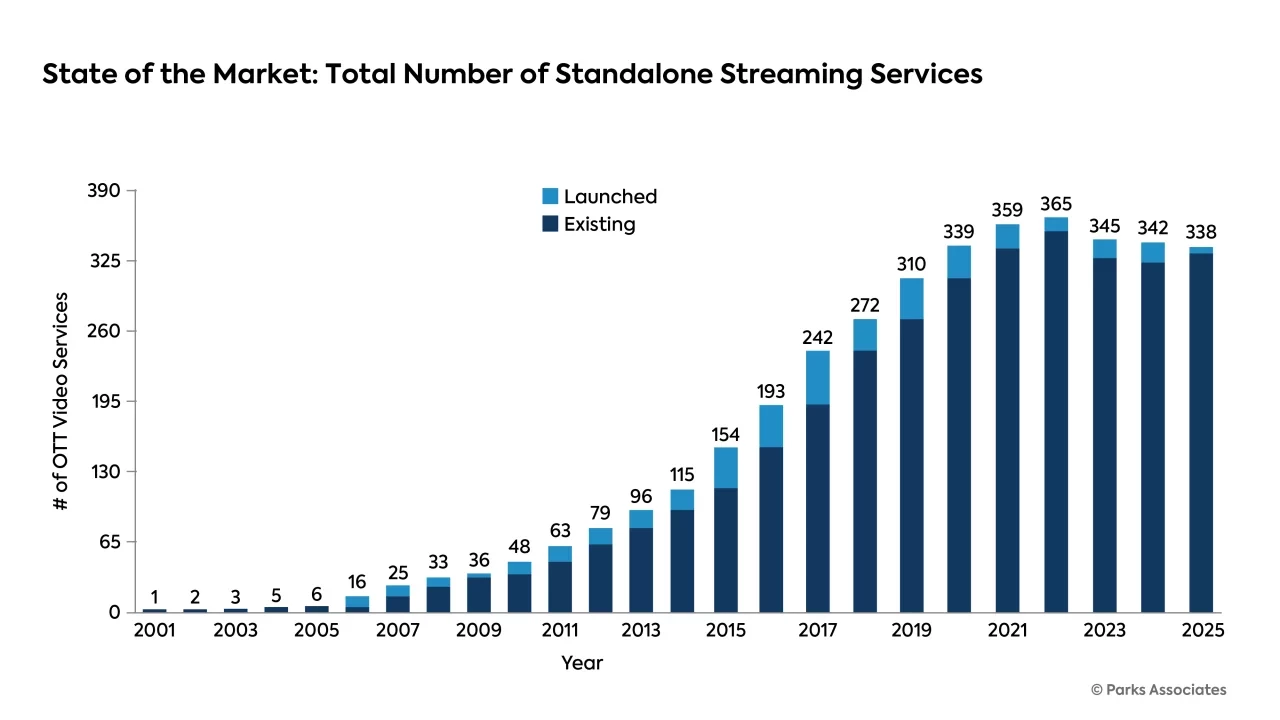
Streaming TV audiences represent a uniquely valuable foundation for next-generation advertising—combining ad tolerance, digital fluency, personalization readiness, and strong interest in interactive and shoppable experiences.
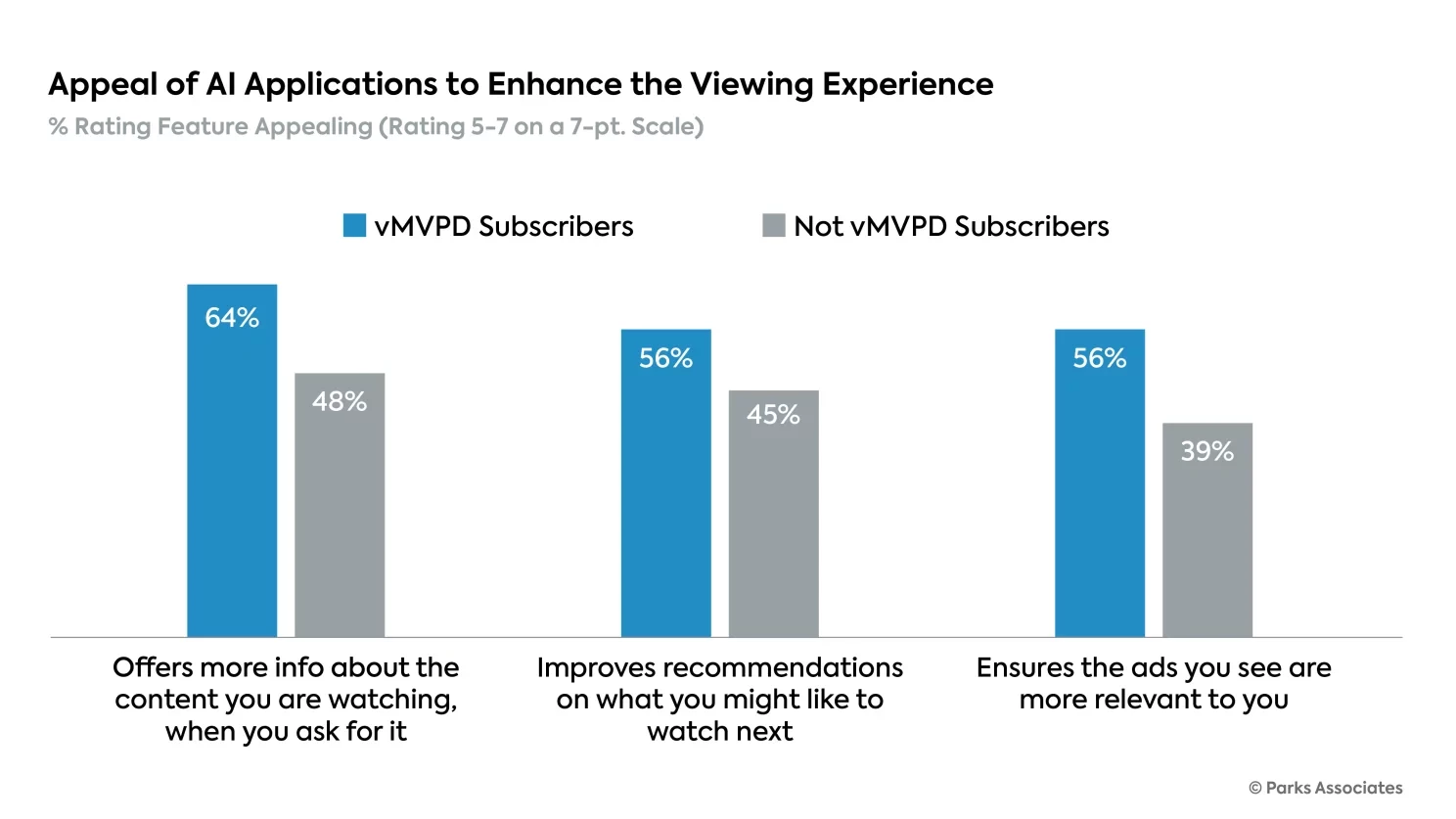
Higher Interest in Relevant, AI-Driven Advertising
Streaming TV audiences demonstrate stronger openness to AI-driven personalization and interactive advertising experiences, positioning them as an attractive segment for next-generation ad formats.
Fifty-six percent of vMVPD subscribers find appealing the ability of AI to ensure the ads they see are more relevant to them, compared with just 39% of non-vMVPD subscribers. This gap indicates openness to personalization rather than avoidance, reinforcing the value of intelligent targeting within streaming TV environments.
Stronger Openness to Interactive Features
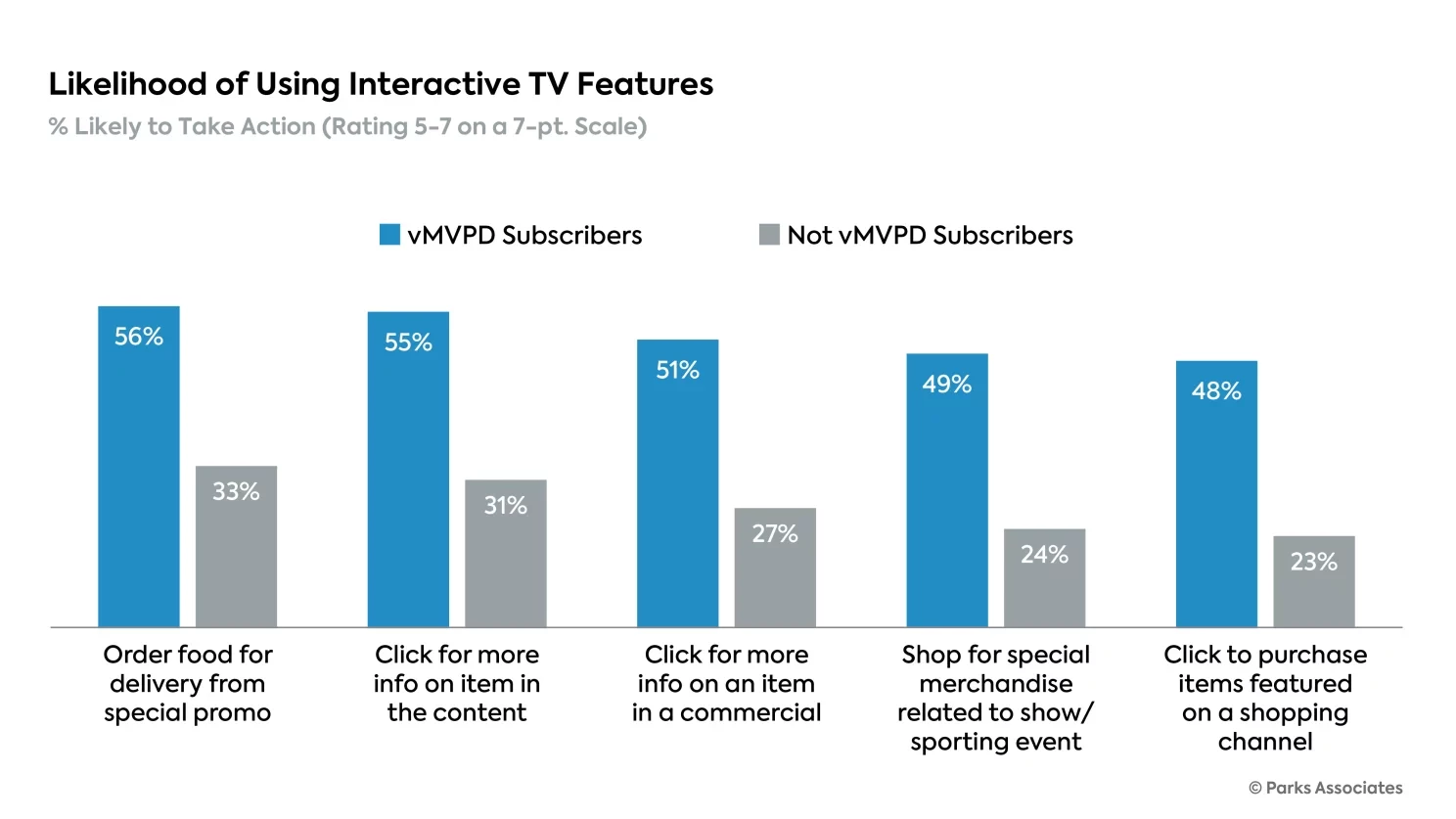
Streaming TV subscribers show significantly greater openness to interactive ads:
- 55% are interested in clicking on an item in a program for more information, compared with 31% of non-vMVPD subscribers.
- 51% are interested in clicking for more information on an item advertised during a commercial break, vs 27% of non-vMVPD subscribers.
- 49% are interested in the ability to shop for special merchandise/memorabilia related to a show or sporting event vs. 23% of non-vMVPD subscribers.
Streaming TV audiences are not only tolerant of advertising, but increasingly open to more dynamic, personalized, and commerce-enabled formats. This combination of tech affinity, ad tolerance, and commerce readiness creates a uniquely fertile environment for click-to-learn formats, QR-triggered purchasing, and sponsored pause screens.
Streaming TV Audience Accelerates Next-Generation Ad Adoption
Live viewing builds urgency and attention, complementing the premium draw of on-demand content. Within streaming TV environments, advertising is not a disruption but an expected part of the experience.
vMVPD viewers are accustomed to ads as part of the experience of live and linear viewing, reinforcing tolerance and reducing resistance to new formats. vMVPD viewers are also more comfortable navigating menus, overlays, and interactive prompts — behaviors that support the adoption of more advanced ad experiences.
The vMVPD layer provides a foundation for introducing innovation. Building on streaming TV as an ad-native experience, advertisers can leverage new formats that integrate naturally into the viewing experience, such as pause ads, without disrupting engagement. As a result, streaming TV audiences are not just receptive to innovation; they can help accelerate the adoption of new advertising formats at scale.
This is an excerpt from Parks Associates new research, Unified Streaming: Unlocking Next-Gen Advertising, released in partnership with Philo. Parks Associates research finds that vMVPD audiences anchor unified video strategies with viewers who are more receptive to advertising, more digitally savvy, and significantly more interested in interactive TV experiences than non-vMVPD viewers. When combined with lifestyle-focused programming, and premium on-demand content, these viewers represent a high-value, commerce-ready audience.
This white paper explores why unified video platforms are uniquely positioned to unlock next-generation advertising and why attempting to retrofit interactivity into pure SVOD environments is a more difficult path. For brands, agencies, and streaming stakeholders, the future of engagement lies in aggregation, not fragmentation.

