

The home energy market is moving toward a more connected and coordinated model. Rising electricity costs, growing adoption of connected devices, and the expansion of distributed energy resources are changing how consumers think about energy use. Smart thermostats, EVs, solar, batteries, and other connected products are becoming part of a broader home energy ecosystem.
Parks Associates’ new 2026 S.H.E.M. State of Home Energy Management report examines this transition and the technologies, consumer needs, and market conditions shaping the next generation of home energy management. The research points to a market moving beyond individual devices toward systems that provide greater visibility, control, automation, and coordination across the home. The report is released in partnership with: SkyBell, Carrier, Johnson Controls, Silicon Labs, Vivint, an NRG company, and Smart Energy Consumer Collaborative (SECC).
Rising costs are changing the consumer relationship with energy
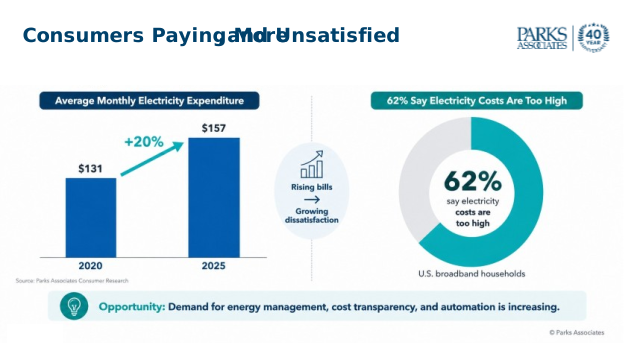
Energy costs are an important driver of this market. Parks Associates research finds that average monthly electricity expenditures increased 20%, from $131 in 2020 to $157 in 2025. In addition, 62% of U.S. broadband households say electricity costs are too high. These pressures are increasing consumer interest in solutions that can provide greater insight into energy consumption and help households manage costs.
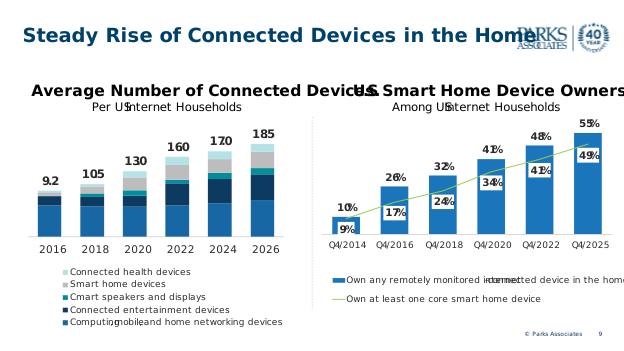
This shift is occurring as the number of connected products in the home continues to grow. U.S. internet households now have an average of 18.5 connected devices, compared with 9.2 in 2016. Forty-nine percent of U.S. internet households own at least one core smart home device. This installed base creates an important foundation for more coordinated energy management.
Connected devices create a foundation for energy management
Smart thermostats illustrate both the progress in the market and the opportunity ahead. Seventeen percent of U.S. internet households own a smart thermostat, up from 9% in 2015. Among smart thermostat owners, 87% report that their savings met or exceeded expectations.
Adoption of a connected product, however, does not necessarily translate into participation in a broader energy program. Only 22% of smart thermostat owners currently participate in a demand response program. Parks Associates research identifies several barriers to greater participation, including limited awareness, concerns about comfort and control, confusing rate structures, and uncertainty about the benefits.
These findings point to the need for a simpler consumer experience. Energy providers will need to clearly communicate the value of participation while reducing the amount of effort required from consumers.
Home energy management brings the pieces together
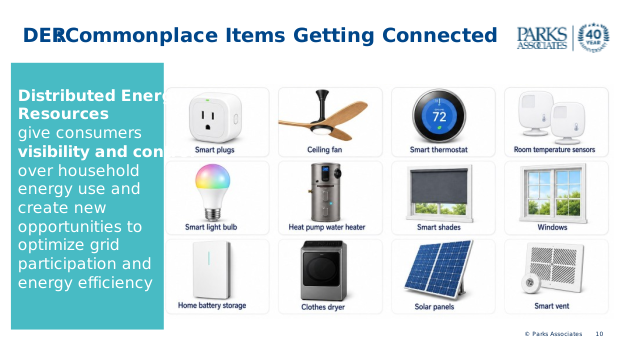
Home energy management systems, or HEMS, provide a framework for connecting, monitoring, and managing energy-consuming and energy-producing devices. These systems can integrate information across devices and provide consumers with a more complete view of household energy use. They can also support greater control and optimization across solar panels, EV chargers, batteries, appliances, and other connected products.
The growth of EVs, solar, and battery storage will increase the importance of these capabilities. These technologies allow households to generate, store, and manage energy in new ways. Batteries can provide backup power during outages, help households manage electricity costs, and support participation in energy programs. EVs also represent an important opportunity because of their large battery capacity and the development of bidirectional charging.
AI expands the role of home energy management
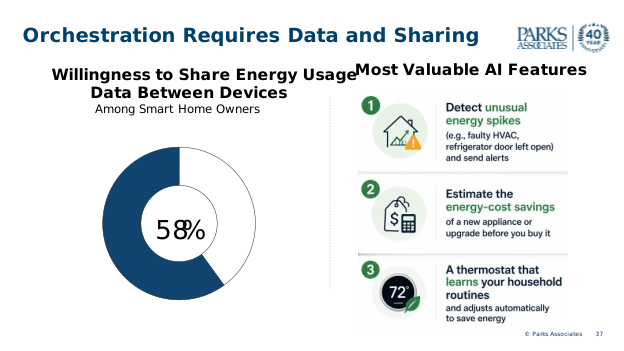
AI can add another level of intelligence to these systems. Applications include detecting unusual energy spikes, estimating potential energy-cost savings, and enabling thermostats to learn household routines and adjust automatically. Parks Associates research also finds 58% of smart home owners are willing to share energy usage data between devices, an important requirement for greater coordination across the home.
The development of HEMS represents a broader change in the residential energy market. The opportunity is to move from individual connected products toward systems that coordinate energy use around cost, comfort, resilience, and household needs. Over time, the home can become a more intelligent and flexible energy resource that also supports the broader grid.
Download the full research report: State of Home Energy Management

