

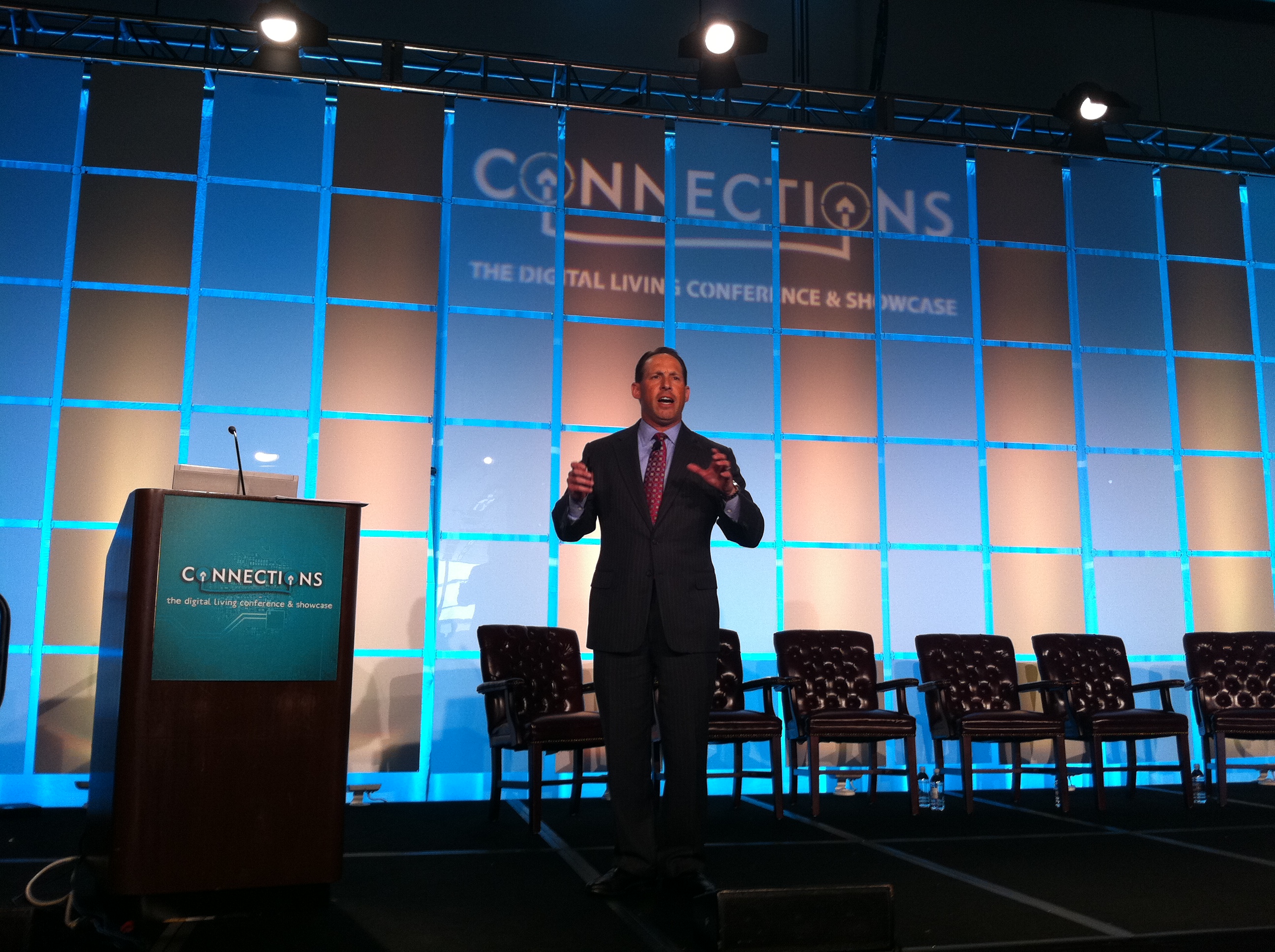
 By: John Antonchick, NCN Associates (June 29, 2011)
Kurt Scherf introduced Glenn and noted that he is the man who brought the iPhone to AT&T.
An introductory video presentation showed several examples of what is possible with the AT&T network and devices like smart phones ranging from games to health monitoring.
Glenn said that they decided to create a new business by wirelessly enabling everything that was running through their network. Glenn’s group is called the Emerging Devices Organization and started with the Kindle. Two and a half years later, they now support many types of devices. Since the initial launch they now have 12.5 million enhanced data customers (as of the first quarter of 2011). Glenn noted that five years ago wireless carriers did not have devices like the iPhone or other devices. He showed a slide indicating that “the next big thing” is connected devices of many types. His point is that they and the industry are “just scratching the surface” of the opportunity.
Glenn said that “everything will be connected”. His group, the emerging devices group, operates like a startup within AT&T and this enables them to pursue a wide range of connected devices.
The wireless industry has changed dramatically, e.g. from penetration of about 6% in 1990. At the early stages, forecasts suggested that 10% would be the maximum penetration in the industry. Today, the penetration is more than 96%. For 20 years, the industry has been saying “this is the year of data”. Glenn said that forecasts showing that penetration will reach 107% by 2013 are too conservative. For comparison, he said that AT&T mobile data traffic has increased 8000% in the past 4 years and that this is not just attributable to the iPhone. They are predicting that this growth rate will continue in the next 4 years. Although there are issues about having adequate spectrum, he feels that this can be accommodated and noted that they want to acquire T-Mobile in part to pursue this growth.
Glenn also noted that the US has surpassed other international markets in leading mobile broadband growth. His point is that this is a major change and that the US has been innovating whereas five years ago we were behind the rest of the world. Glenn suggested that growth of portable CE devices with embedded WWANs is dramatic, showing an example from Parks predictions.
Trends in emerging devices include the integration empowered by smart devices. Glenn said he feels that the smart phone is the center of digital devices and discussed various types of digital devices; pointing out that customers want a simple experience - not different experiences on devices. These include tracking devices, healthcare, picture frames, etc. He also pointed out that the future of the connected car is dramatic with tethered and embedded solutions. However, he noted that today fewer than 20% of Bluetooth enabled devices use that capability. He predicts that all cars will be “smart” and that all of the capabilities will have to work together. The home is a similar issue in that you will want to connect and control your home. Glenn’s point is that capability is “here today”. The opportunity is to have “one digital life” but it will fail if it isn’t easy. He posed the question about “how do we get there?”
The Iwide area) network is a key issue.To grow US capability requires that we spend massive amounts of money to expand these networks, e.g. $19 billion to build out the AT&T networks in 2011. Their accelerated LTE deployment should be finished by 2013. The merger with T-Mobile enables them to accelerate their number of cell sites and will enable them to commit to cover 97% of all Americans (e.g. rural America included).
There is a “unique opportunity” and we are at a “unique point in time”. Demand is exploding, innovation is soaring, connected devices (including cars) provide the platforms and consumers will benefit. Glenn said we should be expecting 300-500% growth soon. AT&T is committed to invest to make this happen and the US should lead in these efforts.
Questions:
1) eHealth and telemedicine: it has been slow developing. What is AT&T doing to stimulate this area? Glenn answered that his group was focused on methods to get quick increases in usage but that the nature of the health business has inhibited approval of many options. He cited an example of a system that reminds people of what and when they should be taking their medications. He said they are working on other systems and embedded device support working with their partners but he expects the progress to be slow.
2) Is it possible to pool all of the connected devices/services into a “data family plan”? Glenn answered that yes, they are looking at how to offer this type of service. He cited Barnes & Noble bundling AT&T service with their service(s). Today, he said you can buy “MyFi” as another example that simplifies the experience.
3) With more devices and data aren’t there more security threats, e.g. with smart meters? Does the consumer have to be responsible or can the carrier provide this capability? Glenn answered that they already provide a high level of security with current services. AT&T has a lab where they help OEMs test security and a certification service to assure good security. He pointed out that all suppliers of products and services must be responsible, e.g. iPhones and Android-based smart phones.
4) How is the AT&T foundry bringing in developers and how does that work? AT&T has set up “innovation centers” to provide an environment to assist developers and collaborate with AT&T.
5) How much of the mobile data traffic growth is consumer vs. business? Glenn said he doesn’t know but they are starting to see how people are using data services, e.g. streaming vs. other. At the SuperBowl this year, more data was being sent out rather than coming in. Today, they are seeing much more data being posted on FaceBook, sent to others, etc. A few years ago, smart phones were being used for pictures; today for video.
6) How important is it to AT&T to get IPv6 implemented and when do you need it to be implemented? Glenn said they have had a team in their CTO organization that has been working on it. He said that they need to migrate to IPv6 as fast as possible.
