
The streaming industry has invested billions of dollars in content, yet one of its most fundamental challenges remains helping consumers find something to watch. According to Parks Associates research, households subscribing to pay-TV and SVOD services average 6.7 subscriptions. The abundance of entertainment options is creating new challenges for consumers, content owners, advertisers, and distribution platforms.
At Parks Associates’ 2026 Future of Video conference, the session Discoverability, Metadata & Content Navigation, moderated by Michael Goodman, Director, Entertainment Research, Parks Associates, 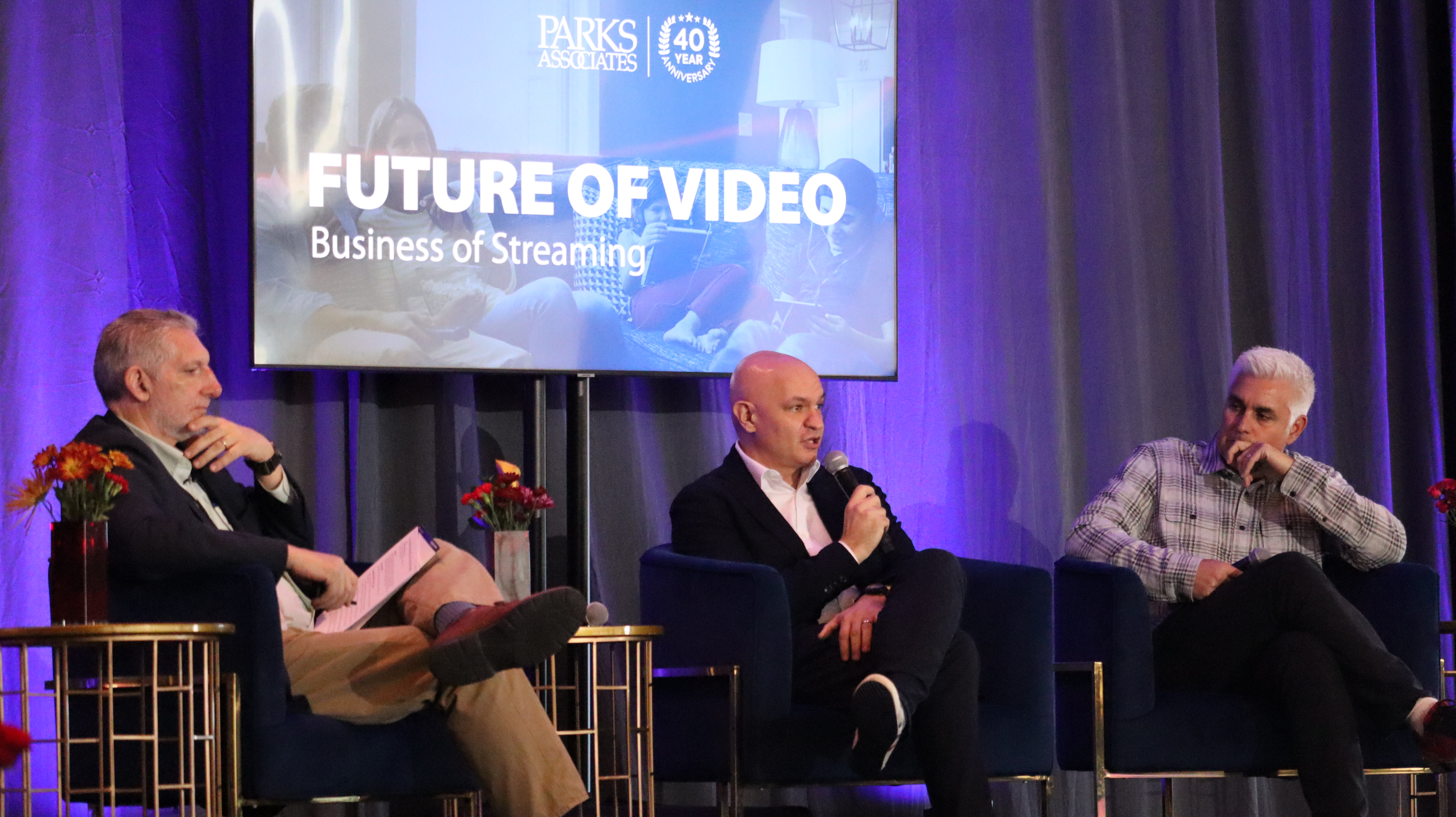 featured executives from ContentWise and Fabric Media. The discussion explored why solving the discovery problem requires much more than better recommendation algorithms, highlighting the intersection of consumer behavior, technology, editorial strategy, and commercial interests.
Search and Discovery Are Two Different Consumer Experiences
One of the most interesting distinctions raised during the discussion was the difference between searching for something specific and discovering something new. A consumer looking for a particular sporting event has a fundamentally different objective than someone browsing for a movie on a Friday night. One wants speed and accuracy; the other may welcome exploration, recommendations, and unexpected suggestions.
This distinction has important implications for how platforms measure success. A lengthy browsing session could indicate that a consumer is enjoying exploring a catalog or becoming increasingly frustrated. One example shared during the session revealed that repeated unsuccessful searches were actually consumers trying to tune into a television channel rather than find an individual program.
“Entertainment platforms need to better understand consumer intent, not simply consumer activity,” said Michael Goodman, Director, Entertainment Research, Parks Associates. “The industry has become very sophisticated at measuring clicks and viewing hours, but understanding why consumers fail to find or access content may be equally important to improving retention.”
Better AI Starts with Better Metadata
The discussion highlighted a critical limitation of AI-powered discovery: even the most sophisticated recommendation engine cannot overcome inaccurate or incomplete content information.
The perspective from ContentWise highlighted the importance of balancing recommendation accuracy with diversity, novelty, and editorial judgment. Algorithms optimized exclusively for immediate engagement can repeatedly surface popular or familiar programming, leaving significant portions of a content library undiscovered. This raises an interesting question for streaming services: are recommendation engines maximizing the value of content investments or unintentionally limiting their return?
Conversational AI introduces another layer of complexity. An AI assistant may confidently recommend a movie that is unavailable on the consumer’s subscribed services. Connecting AI to accurate metadata, current content availability, subscription entitlements, and individual preferences will be essential to making conversational discovery commercially valuable.
Who Controls Discovery Controls the Customer Relationship
The economics of discoverability are becoming increasingly important. Content owners want visibility and direct relationships with audiences, television operating systems want to control navigation and engagement, and advertisers want access to relevant audiences. These objectives do not always align.
Smaller publishers face particular challenges competing for prominent placement against larger companies with greater marketing resources and established distribution relationships. The connected TV home screen is becoming valuable commercial real estate, raising important questions about how paid placement, personalization, and editorial recommendations coexist.
“Discoverability is becoming one of the most important economic issues in the entertainment industry,” said Elizabeth Parks, President and CMO, Parks Associates. “The companies that influence what consumers discover are also influencing where they spend their time, which services they value, and ultimately where advertising and subscription revenues flow.”
Social Media Creates Awareness — But Does It Create Viewers?
The discussion with Jason Damata of Fabric Media also explored the growing role of social media, creators, and short-form video in driving awareness of full-length entertainment. A viral clip may introduce millions of consumers to a program, but converting that awareness into actual viewing remains a significant challenge.
An important distinction is emerging between audiences that media companies rent through third-party social platforms and direct consumer relationships they can activate through email, text messaging, and other communication channels. Social media may initiate discovery, but the commercial value comes from converting that interest into viewing, subscriptions, and ongoing engagement.
This creates an opportunity for entertainment companies to better connect marketing, distribution, and content navigation strategies rather than treating them as separate functions.
Five Questions the Industry Needs to Answer in 2027
- Discovery friction: How often do consumers abandon a viewing session because they cannot find what they want?
- Catalog utilization: How much valuable programming remains undiscovered because of recommendation strategies?
- AI readiness: Is the underlying metadata accurate enough to support conversational search?
- Social conversion: Which marketing and creator-driven experiences translate into actual viewing?
- Commercial control: How should platforms balance paid placement, editorial priorities, and consumer preferences?
Parks Associates is exploring the consumer journey from the initial desire to watch something to successfully accessing content as part of its planned 2027 entertainment research. Understanding where this journey breaks down will be increasingly important to platforms, content owners, advertisers, and technology providers.
The next competitive advantage in streaming may not come from having the largest content library, but from making the content consumers already have access to easier to find, more relevant, and more valuable.
Learn more about Parks Associates’ entertainment research and Future of Video.