
What if one of the biggest opportunities for AI in entertainment is not creating new content, but extracting more value from content that already exists?
The conversation around AI in media and entertainment is shifting from experimentation to measurable business outcomes. Parks Associates research finds that 63% of US internet households use generative AI, up from 51% in 2025, and 22% pay for AI services. Additionally, 54% of AI users rank saving time among its five most valuable benefits. The same emphasis on productivity and measurable value is increasingly driving enterprise AI investments.
At Parks Associates’ 2026 Future of Video conference, Jennifer Kent, SVP and Principal Analyst, Parks Associates, moderated AI in Practice: What Is Actually Working? The session brought together perspectives from: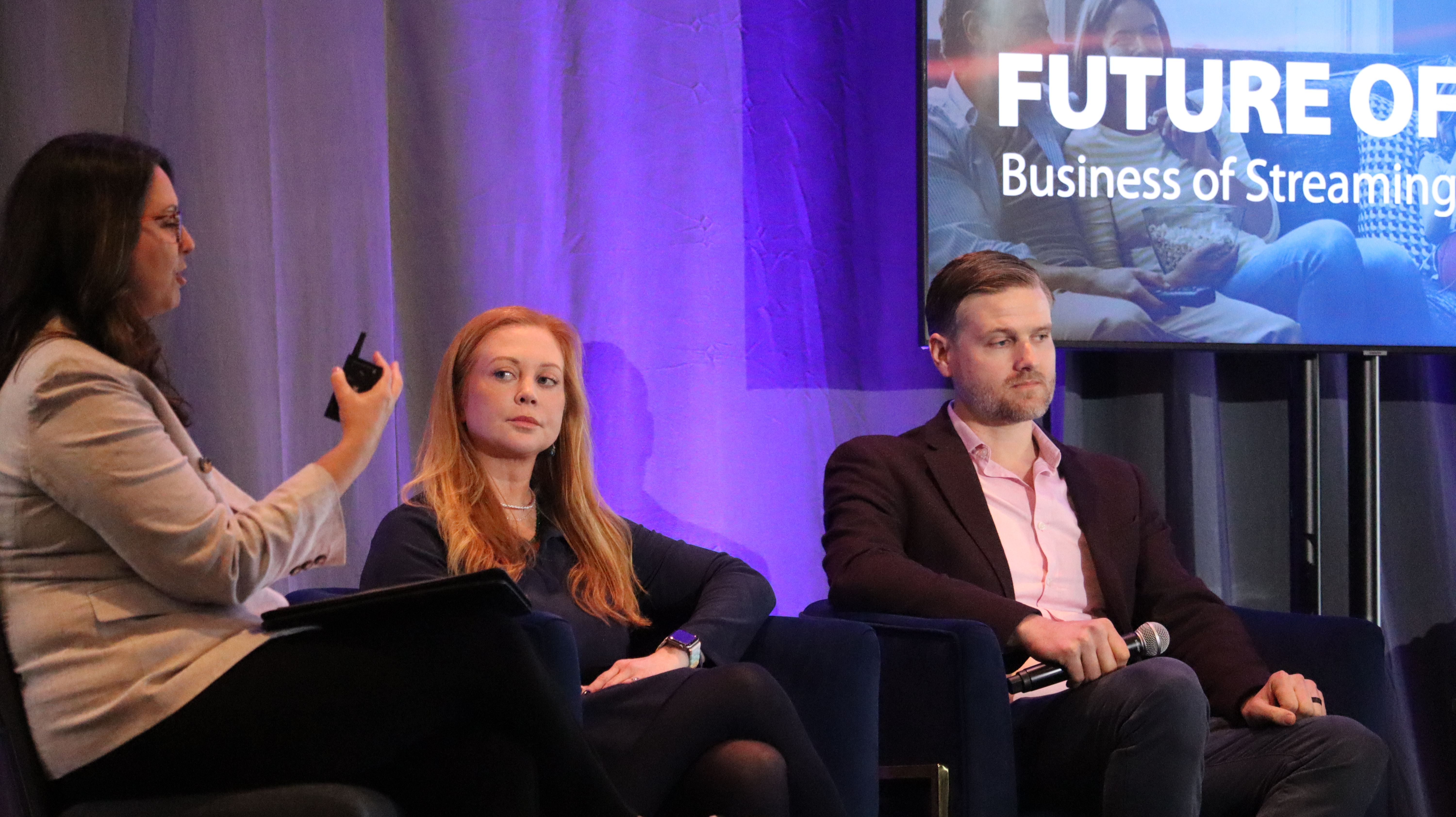
- Serhad Doken, Chief Technology Officer, Adeia
- Jeff Ellin, VP, Product Architecture, FreeWheel
- Megan Fowler, Board of Directors, Women in Streaming Media, and Product Sales Strategy, Comcast Technology Solutions
- Aaron Kroger, Director of Product Marketing, Dalet
- Ryan Steelberg, President and CEO, Veritone
The discussion explored where AI is delivering measurable returns today, where implementation remains challenging, and how entertainment companies can create new revenue opportunities.
The Untapped Value Sitting Inside Content Libraries
One of the most compelling opportunities for media companies is unlocking the value of decades of existing programming. Ryan Steelberg of Veritone brought the perspective of a company with  extensive experience applying AI to large media archives, including longstanding work with ESPN. AI-powered indexing allows organizations to identify, search, and retrieve specific moments within enormous video libraries, dramatically changing how content can be packaged, distributed, and monetized.
An especially interesting example raised during the session involved a broadcaster repurposing existing programming into microdramas. Rather than investing exclusively in original productions, media companies can use AI to identify storylines, characters, and compelling moments within existing content and adapt them for emerging entertainment formats.
This creates opportunities to extend the commercial life of intellectual property, reach new audiences, and experiment with additional distribution channels at a lower incremental cost.
“The entertainment industry has spent decades investing in valuable intellectual property,” said Elizabeth Parks, President and CMO, Parks Associates. “AI creates an opportunity to reconsider the economics of those investments by making existing content more accessible, adaptable, and relevant across new platforms and business models.”
From a Week to an Hour: AI Changes Advertising Operations
Jeff Ellin of FreeWheel brought the advertising technology perspective to the discussion, where AI is increasingly being applied to operational diagnostics, campaign troubleshooting, and data analysis. One example shared during the session involved a client resolving an operational issue in approximately one hour rather than a week.
The implications extend beyond employee productivity. Faster identification and resolution of advertising delivery problems can potentially reduce lost revenue, improve campaign performance, and strengthen advertiser relationships.
Contextual advertising represents another emerging opportunity. AI can analyze individual scenes, themes, and emotional characteristics within programming to help identify relevant advertising placements. Rather than relying exclusively on audience demographics or viewing history, advertisers can potentially align their messaging more closely with the content itself.
The Biggest Barrier to AI May Not Be AI
Successful demonstrations do not automatically translate into scalable enterprise solutions. Inconsistent metadata, fragmented proprietary data, legacy systems, computing costs, and employee adoption all influence whether AI deployments generate sustainable returns. Media companies must invest in the underlying data infrastructure and operational expertise necessary to make AI part of everyday business processes.
The competitive advantage may ultimately come less from access to sophisticated AI models and more from the quality of a company's proprietary data, its ability to integrate intelligence across workflows, and its speed in adapting to new market opportunities.
“AI investments need to be evaluated against specific business outcomes,” said Jennifer Kent, SVP and Principal Analyst, Parks Associates. “The opportunity is not simply to automate existing processes, but to identify where intelligence can fundamentally improve productivity, revenue generation, and the customer experience.”
Agentic AI: Where Automation Meets Human Judgment
Agentic AI is creating opportunities to move beyond recommendations and analysis into the execution of business processes. AI agents can retrieve information, diagnose operational issues, and initiate established workflows within defined parameters. However, the session also highlighted important limitations, particularly when decisions involve premium advertising commitments, contractual guarantees, intellectual property, and editorial judgment.
The near-term opportunity is to automate repetitive, clearly defined activities while maintaining human oversight of consequential commercial and creative decisions. Security, transparency, approvals, and accountability will remain essential as AI becomes increasingly embedded in entertainment operations.
The most significant impact of AI on the entertainment industry may ultimately be invisible to consumers. Faster workflows, more relevant advertising, improved content discovery, and greater programming availability can all strengthen the entertainment experience without necessarily being identified as AI-powered.
For media companies, the next phase of AI adoption will be defined not by the sophistication of the technology itself, but by its ability to generate measurable economic value. The opportunity is to make every content asset, advertising relationship, and business process more productive.
Parks Associates tracks the adoption, monetization, and impact of AI through its AI Experience Consumer Insights Dashboard, Streaming Video Tracker, and ongoing consumer and industry research.
Learn more about Future of Video and Parks Associates’ latest research on consumer AI adoption and monetization.