

TV operating systems (TVOS) are becoming a primary battleground, not just a feature. As TVs get treated more like long-lived “compute platforms,” buyers (and retailers) will increasingly compare sets on software support, speed, and content experience, not panel specs alone. The biggest implication of that is that OS differentiation will increasingly drive brand loyalty and upgrade cycles, with Samsung and LG pushing TV-native & long support while platform-led players (Roku/Amazon/Google) compete on discovery, free live content, and ecosystem gravity.
In addition, FAST/live aggregation is now a strategic growth engine. Roku and Fire TV scoring highest here signals that “free TV” is becoming the default entry point for many households, especially as subscription fatigue grows. That shifts power toward OS owners who can control the home screen, guide, and recommendations, meaning ad inventory, data, and distribution leverage become more valuable than ever. Expect more consolidation of live guides, deeper bundling, and more prominent sponsored placements as platforms monetize attention.
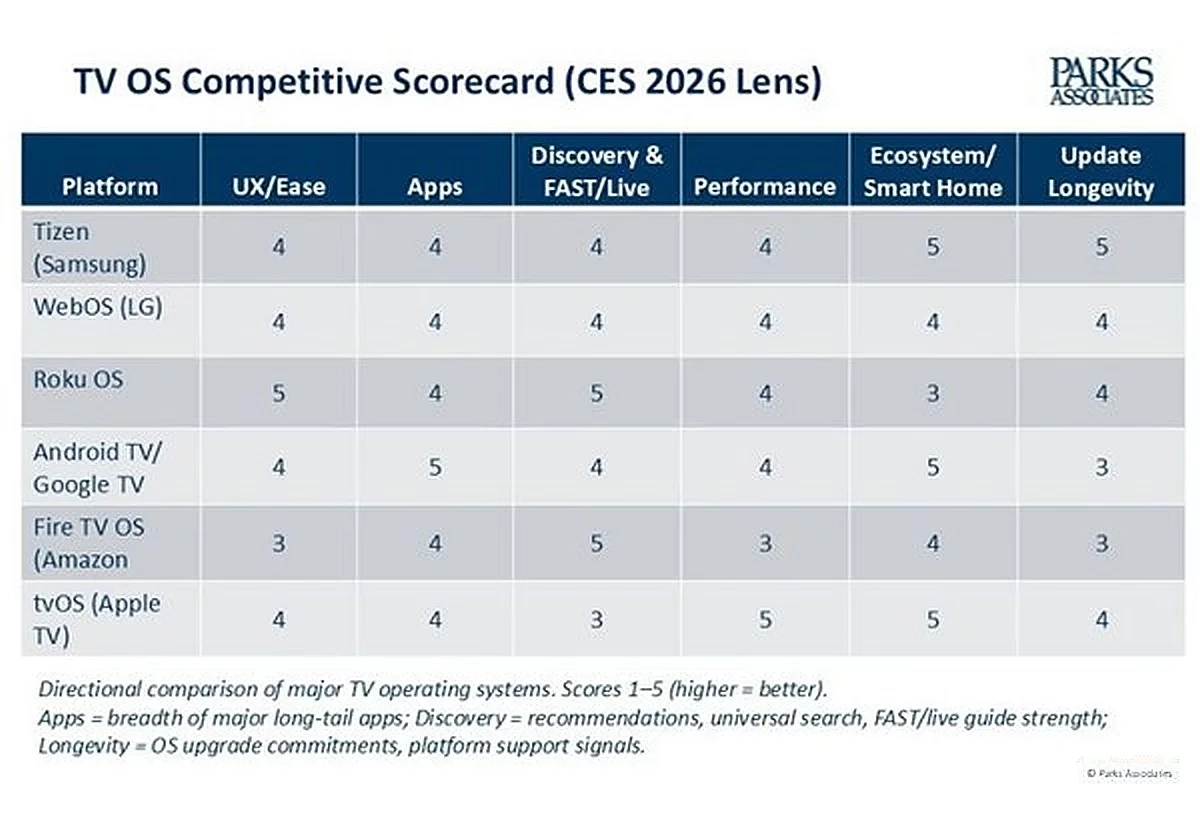
Finally, the market is moving towards two dominant purchasing paths. One, TV-native OS buyers choosing Samsung and LG for integrated performance and longer upgrades, and two, ecosystem buyers choosing Google TV / Fire TV / Apple TV based on household devices and services. According to the Parks Associates recent Connected TV Expansion report, 44% of recent Samsung TV buyers say they chose the brand because it’s known for good performance, while Amazon Fire TV (40%) and Roku (27%) buyers are more likely than others to say they selected their TV models because they like the operating system.
For manufacturers, this increases pressure to either own the OS experience (and commit to long-term updates) or risk becoming a commodity panel behind someone else’s platform. For content/services and advertisers, it means distribution strategy must increasingly be negotiated at the TVOS layer (search, featured rows, FAST channels, and AI discovery), because that’s where viewing decisions are being shaped.

