

On May 27th, Roku announced a Home Screen refresh, marking the company’s largest user interface (UI) overhaul in more than a decade. This update is designed to shift Roku from a static app-launcher experience toward a more personalized, content-discovery-focused interface while still preserving the simplicity that made the platform popular.
According to Preston Smalley, VP of Viewer Product, “when we talked to our users, one thing came through loud and clear: people love streaming, but they were tired of hunting for something to watch. This update is our answer to that. We built the new Home Screen around real viewer habits and frustrations, so it feels more personal, more intuitive, and a lot less work. The goal is simple, when you turn on your TV, Roku should offer what you’re in the mood for. That’s the experience our users asked for, and it’s the one we’re excited to deliver.”
This refresh comes at a critical time for the connected TV market. Many leading TV operating system (TV OS) platforms have recently redesigned their user interfaces, shifting away from app-centric navigation toward experiences centered on content discovery, personalization, and recommendations. For additional perspective on this trend, see the Parks Associates blog Amazon Fire TV Interface Redesign: Advancing Content Discovery, AI Integration, and Platform Control.
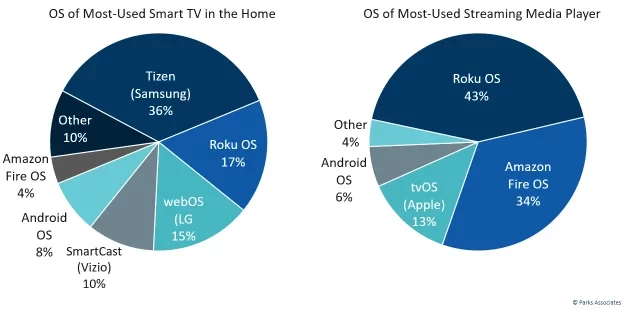
Roku’s continued investment in its user experience is essential to maintaining its leadership position in the streaming ecosystem. According to Parks Associates research, Roku is the leading TV operating system among streaming media players, with 43% of owners saying their most-used player is a Roku device. Among smart TV owners, 17% say their primary TV runs on Roku OS. As competition intensifies among TV OS providers, Roku must continue evolving its platform to improve content discovery, user engagement, and overall viewer satisfaction in order to maintain and grow its market position.
Key attributes of the Roku refresh include the following.
- Roku is prioritizing content over apps. Historically, Roku’s interface has centered on an app grid, requiring users to select a streaming service before deciding what to watch. The redesigned Home Screen shifts the focus from app navigation to content discovery, placing personalized recommendations at the forefront through a new “Top Picks for You” section. These recommendations draw on viewing habits, subscriptions, and trending content to surface relevant programming immediately upon launch.
The change reflects Roku’s broader strategy to reduce the friction associated with navigating an increasingly fragmented streaming landscape and help viewers find content more quickly. By emphasizing content rather than individual services, Roku is aligning more closely with the content-first experiences offered by competitors such as Google TV, Amazon Fire TV, and Apple TV, where users are encouraged to choose what they want to watch before selecting the platform that delivers it. This evolution represents a significant step in Roku’s transition from an app-launching platform to a content discovery and aggregation hub.
- AI and personalization are now central to the experience. AI-driven personalization sits at the heart of Roku’s Home Screen refresh, reflecting the company’s growing investment in machine learning to improve content discovery and user engagement. Several new features leverage behavioral data to create a more tailored viewing experience and reduce navigation friction:
- The new Quick Access feature dynamically surfaces the apps, content, and functions users interact with most frequently, making preferred destinations easier to reach.
- Top Picks for You delivers personalized recommendations based on viewing history, subscriptions, and engagement patterns.
- Your Daily Scoop provides an AI-curated feed of trending shows, live events, entertainment news, and cultural moments aligned with individual interests.
Collectively, these features demonstrate Roku’s strategy of using AI to make the platform more proactive and personalized, helping viewers spend less time searching and more time watching. As competition among TV operating systems increasingly centers on recommendation quality and user engagement, Roku is positioning personalization as a key differentiator and an important driver of ecosystem loyalty.
- Discovery is being organized around interests and moods. Roku is also reimagining content discovery through its new Destinations framework, which organizes programming around viewer interests, genres, and moods rather than individual streaming services. The feature introduces curated hubs for categories such as Sports, Movies, Comedy, Reality, and Kids & Family, alongside collections tailored to specific interests and viewing preferences. Rather than requiring users to decide which app to open before searching for content, Destinations enables them to browse relevant programming across multiple streaming services from a single location.
This approach simplifies the viewing journey and helps consumers navigate an increasingly fragmented streaming environment where content is distributed across numerous platforms. From a strategic perspective, Destinations further advances Roku’s evolution from an app-centric platform into a content aggregation and discovery layer, positioning the company as the primary gateway between viewers and content regardless of where that content resides. By shifting discovery away from services and toward viewer intent, Roku is aligning with a broader industry trend that prioritizes engagement, personalization, and content accessibility over app loyalty.
- Faster access to high-frequency actions. Addressing one of the most common user frustrations, the number of clicks required to perform everyday tasks, Roku’s Home Screen refresh places greater emphasis on convenience and efficiency. Frequently used features such as Continue Watching, Save List, Sleep Timer, Search, and Inputs are now surfaced as easily accessible shortcuts rather than being buried within multiple layers of menus. Many of these functions are also integrated into the new Quick Access section, where their placement is dynamically personalized based on individual usage patterns.
By reducing the steps required to reach commonly used tools and content, Roku aims to create a more seamless and intuitive navigation experience. This focus on minimizing friction reflects a broader industry effort to improve usability and engagement, recognizing that small improvements in navigation can have a significant impact on overall user satisfaction and platform loyalty.
- The left-side navigation has been simplified. The redesigned Home Screen introduces a cleaner and more streamlined navigation experience through a simplified left-side menu. Rather than displaying a full list of navigation options at all times, the menu now collapses into a compact set of icons that expand only when needed. This design change frees up valuable screen space for personalized recommendations, curated content collections, and other discovery-focused features while reducing visual clutter. At the same time, Roku has expanded the size and prominence of its persistent Home Screen advertising placement, balancing a more content-rich user experience with additional monetization opportunities.
By adopting a more modern and minimalist design, Roku is able to showcase more content directly on the Home Screen without fundamentally altering how users navigate the platform. This approach helps preserve the familiarity and simplicity that have long been key strengths of the Roku experience while creating additional opportunities for content discovery, engagement, and advertising revenue growth. The redesign illustrates Roku’s effort to modernize its interface without alienating its existing user base, a challenge that many TV platform providers face when introducing significant UI changes.
- Roku City becomes a larger engagement platform. Roku is also expanding the role of Roku City, transforming what was once a popular screensaver into a more interactive engagement destination. The company has introduced a dedicated Roku City tile on the Home Screen that provides access to an enhanced experience featuring daily trivia, mini-games, interactive exploration, and entertainment-themed content and promotions. By giving Roku City a permanent presence within the navigation experience, Roku is elevating it from a passive visual feature to an active part of the platform’s engagement strategy.
Strategically, this move allows Roku to capitalize on one of its most recognizable and widely discussed brand assets while creating new opportunities to increase user engagement beyond content consumption. The expansion of Roku City also reflects a broader industry trend in which TV platforms are seeking to deepen consumer interaction through lifestyle, gaming, and entertainment experiences that extend beyond traditional video viewing. By encouraging users to spend more time within the Roku ecosystem, Roku City has the potential to support higher engagement, strengthen brand affinity, and create additional opportunities for advertising, sponsorships, and promotional partnerships. Ultimately, the initiative demonstrates Roku’s ambition to evolve from a streaming platform into a broader entertainment destination.
Roku’s Home Screen refresh represents a significant evolution of the platform from an app-centric interface to a personalized content discovery experience. By combining AI-driven recommendations, interest-based content hubs, streamlined navigation, and new engagement features, Roku is aligning itself with broader industry trends while maintaining the simplicity that has long differentiated the platform. As competition among TV operating systems increasingly centers on content discovery, personalization, and user engagement, this redesign positions Roku to strengthen its leadership in the connected entertainment market and better meet the evolving expectations of streaming consumers.

